
Crate training your dog can make everyday life easier, from helping a new puppy settle at night to giving an adult dog a familiar place to rest. The important part is teaching your dog to feel comfortable there, rather than simply putting them inside and hoping they get used to it.
Crate training is not for every dog
Crate training is not for every dog, and it is not something every owner needs to do. Some dogs are comfortable in a crate, while others find confinement stressful and do better with a playpen, a puppy-proof room or a bed near their family. Choosing an alternative does not mean you have failed your dog.
Never force your dog into a crate or leave them to panic in the hope they will get used to it. If your dog repeatedly struggles with confinement, stop and seek individual advice. The aim is to help your dog feel safe and settle comfortably, using an arrangement that suits them and your household.
By Justin Jordan. Updated 21 October 2026.
Use a crate, but don’t abuse a crate.
Crate training at a glance
- Start with the door open and let your dog choose to explore.
- Build confidence with food, praise and short, comfortable sessions.
- Practise closing the door before adding time or moving away.
- Meet your dog’s needs for water, toilet breaks, exercise, company and rest.
- Respond to distress and make the next session easier.
- Use a suitable alternative if your dog is uncomfortable with confinement.
What can crate training help with?
A dog who is comfortable in a crate has a familiar resting place that can be useful at home and in some situations away from home. It may help with managing a puppy while you are nearby, preparing for veterinary care, or getting used to a suitable travel crate before a journey.
A crate can also support toilet training by helping you supervise your puppy’s routine. It does not teach bladder control, guarantee dry nights or replace regular trips outside. Puppies can still have accidents in a crate, particularly when left longer than they can manage.
Our puppy toilet training guide explains the importance of supervision, regular opportunities to go outside, and the 3 Ps: Patience, Persistence and Praise. Those same qualities go a long way with crate training!
Being comfortable in a crate may also make veterinary confinement less unfamiliar if your dog ever needs it. However, recovery requirements and travel safety need their own planning. A household crate is not automatically suitable or safely secured for car travel.
Choosing and setting up your dog’s crate
Give your dog enough room
Your dog needs to stand at full height, sit, turn around and lie comfortably stretched out. Choose a sturdy crate with secure fittings and no sharp edges or gaps that could trap a paw or jaw. Check the fit as your puppy grows.
If you use a purpose-made divider, it must still leave enough room for comfortable movement and rest. Never make the space cramped to discourage toileting. A puppy who cannot stay comfortable and clean needs a different arrangement and more frequent toilet opportunities.
Choose a comfortable location
Start somewhere quiet enough for rest but close enough for your dog to feel part of the household. Avoid busy walkways, direct sun, heaters and draughts. In Brisbane, pay particular attention to heat and airflow. A room that feels comfortable early in the morning can become quite warm later in the day.
Some dogs like a partial cover; others settle better with a clear view. If you use one, keep ventilation open and fabric out of reach of a dog who might pull it through and chew it. Make sure children and other pets leave your dog alone when they are resting.
Check what goes inside
Provide suitable bedding and fresh drinking water in a stable bowl. Remove leads, collars, harnesses and dangling tags that could catch. Check bedding and any enrichment items for chewing or swallowing risks, and supervise unfamiliar items before considering whether they are suitable for your dog.
Do not restrict drinking water as a toilet-training shortcut. If your dog has unusual thirst or needs an individual fluid-management plan, speak with your vet.
How to crate train your dog, step by step
Work through these stages at your dog’s pace. A comfortable response at one stage tells you more than the number of days you have been practising. Keep sessions short enough that your dog can succeed.
Step 1: Introduce the crate with the door open
Secure the door open so it cannot swing shut or bump your dog. Let them investigate without pressure. Reward a relaxed approach, a sniff or a step towards the entrance.
You can place a little food near the doorway and gradually further inside as your dog becomes comfortable. Let them come out freely. Avoid pushing them in, dragging them towards it or using food to lure them inside before unexpectedly shutting the door.
Step 2: Make going inside worthwhile
Offer part of a meal inside the open crate, placing the bowl where your dog can comfortably reach it. That might mean starting at the entrance. Move it further inside only when your dog is happy to follow.
Reward voluntary visits and relaxed resting as well. Once entering is familiar, you can add a simple cue such as “crate” or “bed”. Use the same word consistently and keep your approach calm.
Step 3: Introduce the door separately
A dog who happily eats in an open crate is not necessarily ready to be shut inside. Start by moving the door slightly, rewarding comfort, then opening it again. Progress to a momentary closure while you remain beside them.
Open the door before your dog becomes worried. If they freeze, stop eating, repeatedly look for an exit or scramble out, make the next attempt easier. There is no need to reach a particular number of minutes before the session counts as progress.
Step 4: Build comfortable time while you stay nearby
Gradually add a little time with the door closed while you sit nearby. Mix easier repetitions with slightly longer ones. Watch for loose body language and genuine settling, rather than assuming silence means your dog is comfortable.
Practise after a toilet break and an appropriate activity, when your dog is ready for some quiet time. Trying to exhaust a puppy into accepting the crate can leave everyone frustrated. Balance activity with rest.
Step 5: Add movement and brief periods apart
Once your dog is comfortable with you nearby, stand up, sit down, take a step away and return. Build movement and distance in small amounts. When that is easy, try stepping briefly out of sight.
Change one thing at a time. Increasing the duration, moving the crate and leaving the room together can turn an easy exercise into a difficult one. Practise during ordinary time at home so the crate does not only appear when everyone is about to leave.
For puppies, this sits alongside the other positive introductions in our puppy desensitisation guide and checklist. It is about building confidence through manageable experiences.
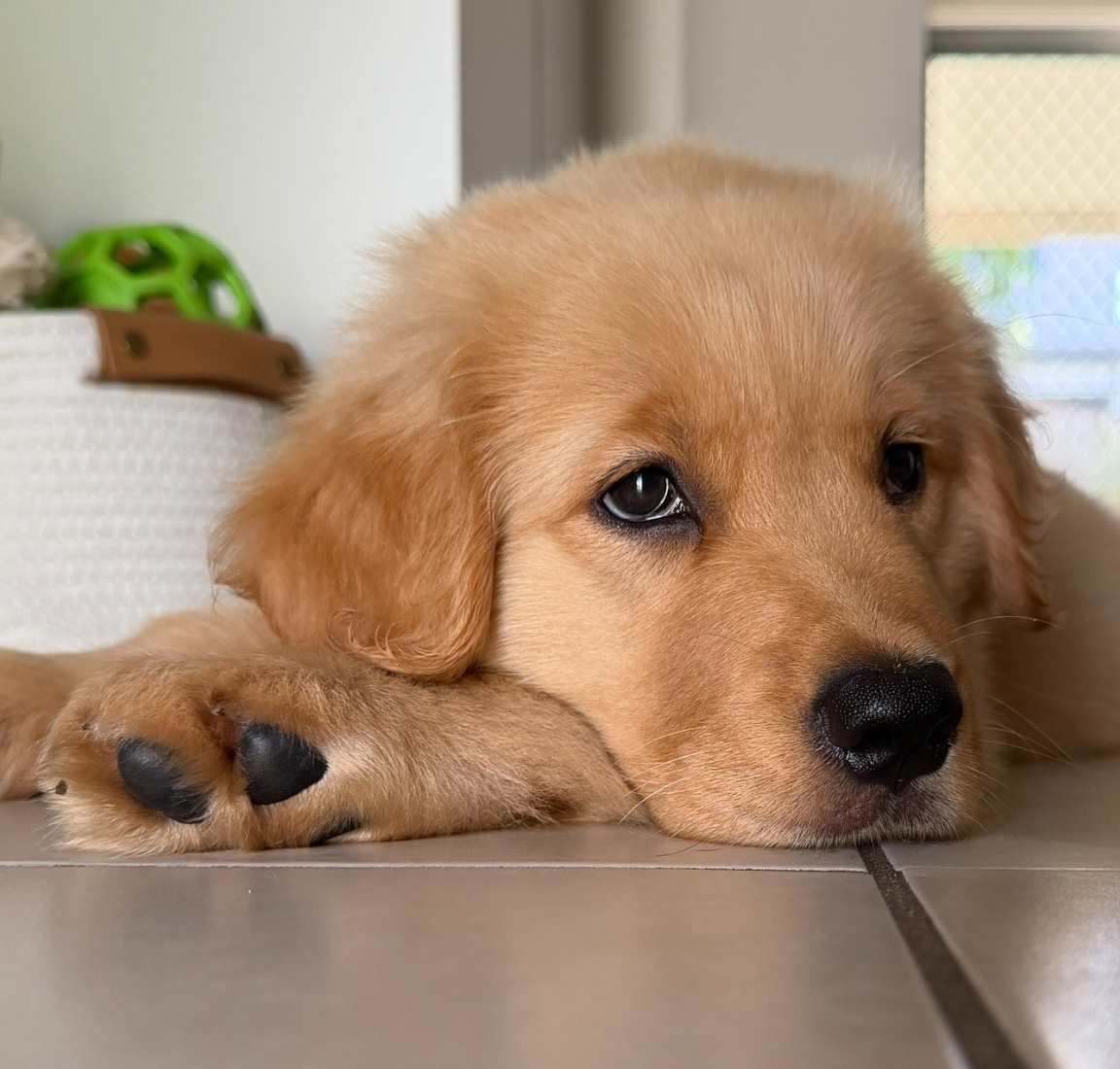
Crate training a puppy at night
The first few nights in a new home can be a big adjustment. Start with the crate near your bed, or close enough that you can hear your puppy and respond. Keep the evening predictable: an appropriate activity, time to wind down and a final toilet opportunity before sleep.
Young puppies may need toilet breaks overnight. Take them to their usual spot, quietly praise them for going, then return to the sleeping area without starting a game. Their needs will change as they develop, and there is no age at which every puppy can reliably hold on all night.
If your puppy is not yet comfortable sleeping in a closed crate, use a suitable pen or puppy-proof sleeping area while you continue the daytime introductions. Bedtime should not become a test of how long they can cry.
Our guide to helping your puppy sleep through the night covers the wider bedtime routine. Adjust it to your puppy rather than expecting a fixed timetable.
What if your puppy cries in the crate?
Crying gives you information. Your puppy may need the toilet, feel frightened, be uncomfortable or find the exercise too difficult. Check those possibilities before deciding they are simply asking for attention.
Respond calmly. Offer a toilet opportunity when needed, check the setup and stay closer or shorten the session. You can support a worried puppy without turning the moment into playtime.
Do not wait for a prescribed period of silence while a dog is panicking. If you see frantic escape attempts, persistent heavy panting unrelated to heat or activity, drooling, trembling or escalating vocalisation, end the confinement safely and seek help. Avoid putting your hands into the space of a panicking dog if doing so could cause injury.
A brief whine does not establish separation anxiety, but repeated distress needs attention. Our separation anxiety article explains why a dog struggling when left alone needs an individual approach.
How long can a dog stay in a crate?
There is no single number that suits every dog. Age, health, toilet needs, previous learning and comfort all matter. The longest your dog can physically hold their bladder is not a sensible target for confinement.
Keep daytime crate use brief and purposeful, with regular opportunities for movement, toileting, drinking, interaction and enrichment. Consider the total time across the day as well as each individual session.
A crate is not a suitable arrangement for leaving a puppy shut away for an entire working day. Plan appropriate care or a larger secure area that meets their needs. A pen may give more room, but it still requires gradual introduction and does not replace company or toilet breaks.
Medical rest is a separate situation. Follow your vet’s instructions and ask for support if your dog struggles with the prescribed restrictions.
Can you crate train an adult or rescue dog?
Yes, adult dogs can learn to use a crate. Start with the same gentle introductions and do not assume previous experience was positive. A dog who hesitates at the doorway may need more time, a different setup or an alternative resting space.
For a newly adopted dog, allow time to learn about the household before adding unnecessary challenges. Our guide to welcoming a rehomed dog covers preparation, routines and building trust.
If confinement causes significant distress, stop and discuss it with your vet and a suitably qualified behaviour professional. Crate training is not a treatment for separation anxiety, and closing a distressed dog inside can increase the risk of panic and injury.
Common crate training mistakes
- Moving too quickly: eating one meal inside does not mean your dog is ready to be left alone there.
- Using the crate as punishment: keep it associated with comfort and predictable, positive experiences.
- Expecting the crate to solve everything: it cannot replace supervision, teaching, social contact or suitable activity.
- Ignoring toilet needs: accidents mean the routine or setup needs attention, not that your puppy needs a reprimand.
- Leaving unsafe items inside: check fittings, bedding and equipment regularly.
- Insisting every dog must use one: a well-managed alternative can work very well.
If biting and mouthing increase when your puppy is tired, our puppy mouthing management guide can help you look at the whole routine. Avoid making the crate a place your puppy is sent when everyone has had enough.
Crate training questions we often hear
How long does crate training take?
Some dogs become comfortable quickly; others need weeks or longer. Previous experiences and the level of confinement matter. Progress when your dog is relaxed, rather than working towards a deadline.
Should I cover the crate?
Only if it helps your dog and remains safe. A partial cover may suit some dogs, while others prefer an open view. Maintain airflow, monitor temperature and prevent access to fabric that could be chewed or swallowed.
Can I use a playpen instead?
Yes. A suitable pen, gated area or puppy-proof room may be a better fit. Introduce barriers gradually and check that the space is secure, comfortable and suited to your dog.
Will a crate stop separation anxiety?
No. Learning to rest in a crate and learning to cope when alone are different skills. A dog can enjoy their crate while you are home and still become distressed when you leave. Seek individual help rather than extending confinement.
Do I need to lock the door every time?
No. Once introduced safely, an open crate can remain available as a resting place. Secure the door so it cannot swing and frighten or trap your dog.
Need a hand getting started?
Crate training your dog should make life more comfortable for both of you. Take your time, watch the dog in front of you and build on the little wins. A relaxed visit to the crate is a better foundation than a long session spent worrying.
Our in-home puppy setup sessions help Brisbane families with sleeping arrangements, toilet training and everyday routines. Our Puppy School classes provide practical guidance as your puppy grows, while in-home behaviour training offers individual support for dogs who need a more tailored plan.
For the next stage of everyday manners, explore our group obedience classes. You can also contact our team to discuss the right starting point for your dog.
Give your dog a pat for us.
Further reading
- RSPCA Australia: introducing a transport carrier
- Dogs Trust: playpen and crate training
- Dogs Trust: separation anxiety signs and support
This article provides general training information and does not replace individual veterinary or behavioural advice. Speak with your vet about health concerns, sudden changes in behaviour or difficulty coping with confinement.