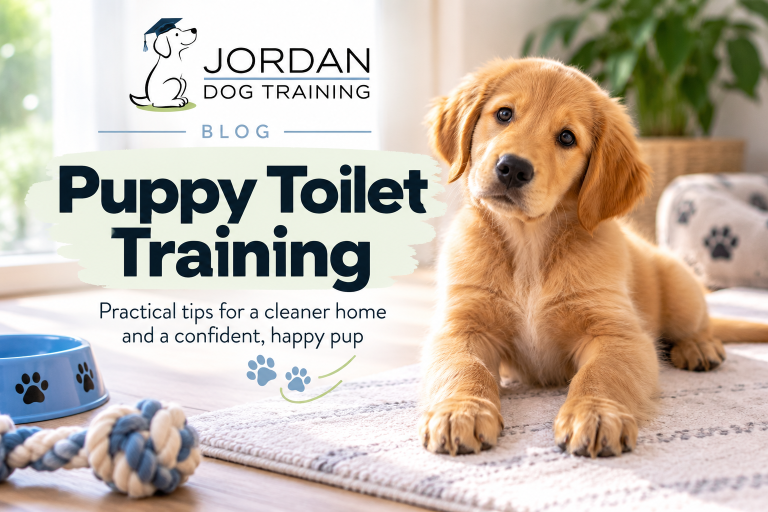

Toilet training a puppy is unfortunately not something that happens overnight. Some puppies pick it up quite quickly, while others need a little longer. Every puppy is different, and accidents are a normal part of the learning process.
Your puppy isn’t being ‘naughty’ or deliberately going to the toilet inside to annoy you. Young puppies are still developing bladder control and learning where you would like them to go. Sometimes those accidents happen at the most inconvenient times and in the most inconvenient places!
Remember the 3 Ps: Patience, Persistence and Praise
At Jordan Dog Training, we encourage owners to remember the 3 Ps: Patience, Persistence and Praise. Add plenty of supervision, consistency and understanding, and you’re giving your puppy the best possible chance of success. Did we mention patience?
Toilet training takes time, and that may mean the occasional trip outside at 2 or 3 am during those early weeks. It’s not always fun standing outside in the cold waiting for a puppy to do a wee, but helping them practise in the right place is much easier than trying to undo an established habit later.
When should you take your puppy outside?
Don’t wait until your puppy has an accident to think about a toilet break. Take them to their designated toilet spot regularly, particularly:
- First thing in the morning and after every nap.
- Shortly after eating or having a big drink.
- After playtime or an exciting interaction.
- Before settling down for the night.
- Whenever you notice sniffing, circling, wandering away or suddenly becoming restless.
Very young puppies may need opportunities to toilet every one to two hours while awake, sometimes more often. As their bladder control develops and they’re consistently getting it right, you can gradually extend the time between breaks. Age-based guides are only rough guides, not a target your puppy must meet.
Teach a toilet cue and reward the right behaviour
Choose a simple cue such as ‘toilet’ or ‘wees’ and use it consistently when your puppy is going in the right place. Once they’ve finished, offer a treat and some gentle praise straight away, while you’re still at the toilet spot. That immediate reward helps your puppy understand exactly what they’ve done well.
We say gentle praise because we don’t want to get so excited that we distract the puppy halfway through! Give them a moment to finish, then reward them.
What about puppy toilet training pads?
If your long-term goal is for your dog to toilet outside, we’d generally encourage you to start building that habit from the beginning wherever practical.
Puppy pads can certainly be useful, particularly when a young puppy needs to be left indoors and can’t reasonably wait for someone to take them outside. Just keep in mind that moving from indoor pads to outdoor toileting can mean an extra stage of training. If you do need pads, placing them near the exit your puppy will eventually use may help with the transition.
For more help preparing your home for a new puppy, have a look at our Puppy Setup page.
Supervision makes a big difference
Puppies can develop preferences for particular surfaces, including carpet and rugs. If you can’t keep a close eye on your puppy, consider using baby gates or a suitable puppy pen to limit access to rooms where accidents are more likely.
If you discover an accident, don’t tell your puppy off. They won’t understand why you’re upset, and punishment can make them reluctant to toilet in front of you. Simply clean the area thoroughly with a pet-safe enzymatic cleaner and make a mental note to offer the next toilet break a little earlier.
If your puppy suddenly starts toileting much more often, seems uncomfortable, strains, or has an unexpected change in their toileting habits, have a chat with your vet to rule out a medical issue.
Helping your puppy settle into a routine
Toilet training is just one part of helping a new puppy settle into family life. A predictable routine, sensible supervision and positive reinforcement all work together. You might also find our articles on helping your puppy sleep through the night and your puppy’s first six months helpful.
If you’d like some hands-on guidance with puppy training, socialisation and building good habits from the beginning, take a look at our Jordan Dog Training Puppy Pre-School.
Remember, progress isn’t always a straight line. Keep giving your puppy opportunities to get it right, celebrate the little wins and stick with those 3 Ps: Patience, Persistence and Praise.