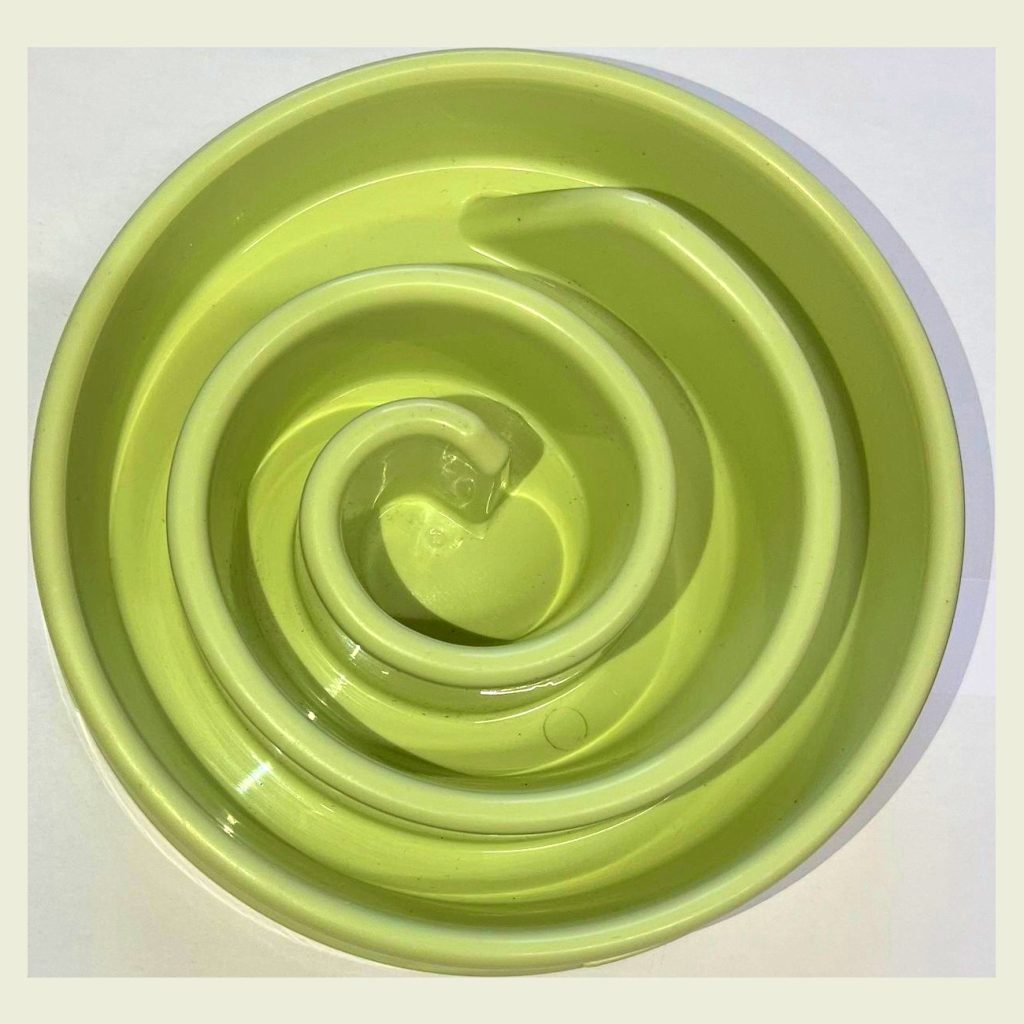
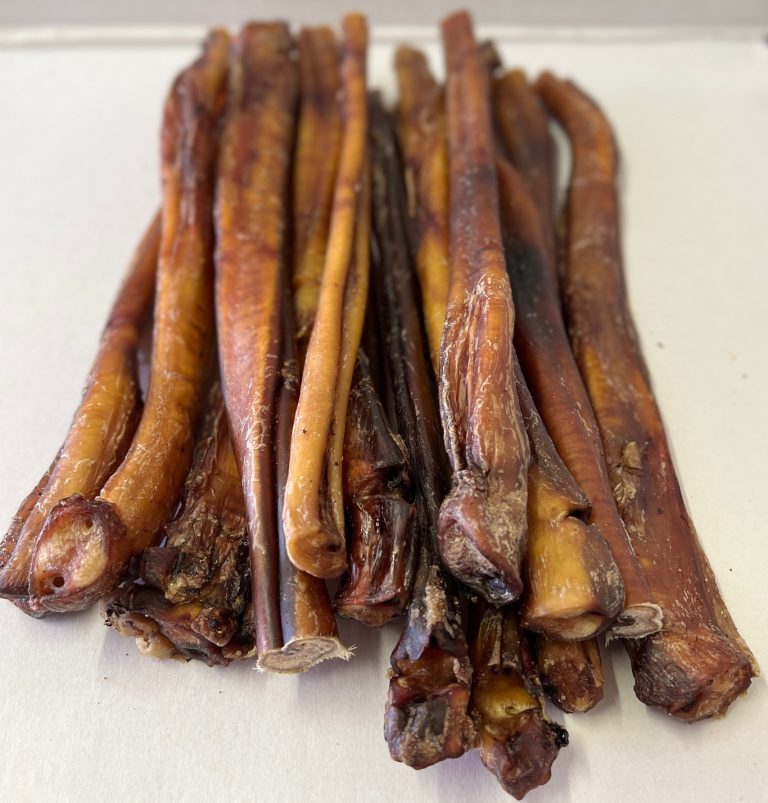

Some dogs settle down and chew. Others seem determined to swallow the last piece in one go. Bully stick holders are designed to grip one end of a chew, but choosing and using one takes more care than simply popping a treat into a toy.
Always supervise. Some dogs will try to swallow treats, chews or parts of toys whole, even when a holder is used. No holder can guarantee that a chew will stay secured or prevent choking or a blockage. If your dog gulps chews, or you are unsure whether a chew or holder suits them, have a chat with your dog’s vet first.
What is a bully stick holder?
A bully stick holder is an accessory designed to hold one end of a bully stick, also called a pizzle chew. The aim is to make the remaining end harder for a dog to take into their mouth as the chew gets shorter. It may also give the dog something easier to hold with their paws.
That is its intended function, not a safety guarantee. A dog may pull the chew free, break off a piece further up the stick, damage the holder or try to swallow the holder itself. The dog, the chew and the holder all need to be considered together.
Why the last piece deserves attention
A short leftover piece can be easy to gulp. A swallowed chew can become stuck in the food pipe or cause a digestive-tract obstruction, while an object blocking the airway causes choking. Calling a treat “natural” or “digestible” does not mean it is safe to swallow whole.
Australian Veterinary Association resource Vet Voice cautions against very tough, chewy treats for dogs that gulp without chewing thoroughly. For a known gulper, the sensible starting point is veterinary advice about suitable alternatives. Buying a holder should not be treated as permission to keep offering a chew that the dog cannot manage.
How different bully stick holders work
Most designs rely on either an adjustable clamp or a close-fitting opening. The mechanism matters, but neither style will suit every stick or every dog.
- Screw or clamp designs: products such as the Bow Wow Buddy and Woof BullySafe use a tightening mechanism to secure the chew. Follow the instructions for that exact model and check that the particular chew is held firmly.
- Friction-fit designs: products such as Bully Grip rely on a snug fit in a rubber opening. A thin, tapered or uneven stick may fit differently from the previous one.
- Treat toys: toys such as the West Paw Qwizl can hold suitable treats. A treat toy should not automatically be assumed to grip a bully stick as securely as a dedicated holder.
These are examples of different designs, not a ranking or a Jordan Dog Training endorsement. Manufacturer descriptions explain how the products are intended to work; they are not independent proof that a product prevents choking.
Check the fit of every chew
Natural chews vary in thickness, shape and texture, including within the same packet. A holder that fitted yesterday’s stick may not securely hold today’s.
- Choose the holder size using the manufacturer’s guidance for your dog and the actual chew dimensions. It must not be small enough for your dog to swallow.
- Load and secure the chew exactly as instructed. Before giving it to your dog, check whether it can slide, twist or pull free. If you cannot achieve a secure fit, do not use that combination.
- Watch for loosening as chewing changes the shape and texture of the stick. A check at the start does not establish that it will stay secure throughout the session.
- Do not drill, cut, glue or improvise modifications to make a chew fit. Do not assume that a product advertised for “all chews” will fit your particular stick.
Our Monster Bully Sticks are extra thick and very hard, so suitability for your dog’s teeth and chewing style comes before holder compatibility. We have not verified a particular holder as compatible with every Monster Bully Stick. Do not force an oversized stick into a holder or assume a firm grip makes a hard chew appropriate.
What active supervision looks like
Stay with your dog and watch how they use the chew. Being elsewhere in the house, checking occasionally or watching on a camera is not a substitute for being present. Put the chew away when you cannot supervise.
The RSPCA advises careful selection and supervision of chewing items because of risks including choking, tooth fractures and swallowed material. During a session, stop using the combination if your dog keeps trying to gulp, pulls the stick loose, bites off large chunks, or starts breaking or chewing pieces from the holder.
Follow the holder’s instructions about when to remove the remaining chew. There is no single leftover length that is suitable for every dog. Do not leave an empty holder with your dog unless the manufacturer specifically says it is suitable for use as a chew toy.
A holder does not protect teeth
Securing a chew does not make it softer. Very hard items can damage teeth. Ask your vet about an appropriate chew, particularly for a puppy, a dog with worn or damaged teeth, or a dog with dental disease or previous dental treatment. Digestive problems, allergies and other health conditions can also affect what is suitable.
If a long-lasting chew is unsuitable, your vet can help you choose another activity, such as an appropriately sized food-stuffable toy with suitable food. Treats still count towards your dog’s daily food intake. Our guide to choosing natural dog treats covers further considerations.
If your dog gulps when someone approaches
Gulping can sometimes happen because a dog is worried about losing something valuable. Freezing, moving away with the chew, growling or swallowing faster when approached can be signs that extra help is needed.
Give your dog a quiet space away from children and other pets. Do not chase, punish or repeatedly grab chews to test their reaction. A holder does not resolve resource guarding. Discuss the behaviour with your vet and a qualified, reward-based trainer. Dogs Trust explains resource guarding and why taking items away can make the concern worse. You can also contact Jordan Dog Training for help with a suitable training plan.
Clean it and check it before the next session
Inspect the holder for cracks, loose parts, sharp edges and missing material. Replace damaged equipment. Vetwest’s chew-toy guidance highlights suitable size, durable materials and avoiding small detachable parts.
Clean the holder according to its manufacturer’s instructions, including any gripping surfaces or removable components. Do not assume every holder is dishwasher safe. Wash your hands after handling chews, clean the chewing area and follow the chew supplier’s storage advice. The RSPCA’s enrichment guidance also stresses choosing suitable items, supervising their use and checking their condition.
When to contact a vet urgently
If your dog is struggling to breathe, appears to be choking or collapses, seek emergency veterinary care immediately. Contact the nearest emergency vet while arranging urgent transport. Do not wait to see whether the chew softens or passes.
If your dog swallows a large piece of chew, a holder or part of a holder, contact your vet promptly for advice, even if they initially seem well. Repeated vomiting or retching, drooling, difficulty swallowing, abdominal pain, unusual tiredness or loss of appetite also warrant urgent veterinary advice. Do not try to induce vomiting unless a vet specifically directs you to.
Australian Animal Emergency Service guidance treats breathing difficulty as an emergency and advises urgent veterinary attention for swallowed foreign objects. Its foreign-object advice also warns against trying to make a pet vomit at home.
Choose for the dog in front of you
A well-fitted holder may be useful for some dogs, but it cannot turn every chew into a suitable choice. Consider your dog’s habits, health and teeth, use the product as instructed, and always supervise. For a dog that tries to swallow things whole, veterinary advice should come before another experiment with a chew.
Disclaimer: This article provides general information and is not a substitute for individual veterinary advice. Some dogs will attempt to swallow treats, chews, toys or their parts whole, even with a holder. No chew or holder is suitable for every dog or completely risk-free. Always actively supervise. If in doubt, have a chat with your dog’s vet before offering a chew or holder.
Research note: Australian animal-welfare and veterinary sources linked above inform the general safety guidance. They do not certify or endorse the named holders. Product mechanisms are described from manufacturer information. This article does not claim hands-on testing or veterinary review of a particular holder.
Give your dog a pat from us.

Justin Jordan is a dog behaviourist and the founder of Jordan Dog Training, a family-owned Brisbane business. With more than 35 years of experience in the pet industry, Justin and his team help families with puppy training, everyday manners and behaviour concerns.