By Justin Jordan | 17 October 2026
You put dinner down, turn around to put the bag away, and the bowl is already empty. Your dog looks at you as though you have forgotten to feed them.
If that sounds familiar, a slow feeder bowl may be worth considering. It can make food a little less easy to hoover up and turn part of the meal into an activity. The trick is choosing something your dog can use comfortably, rather than the most complicated maze on the shelf.
What is a slow feeder bowl?
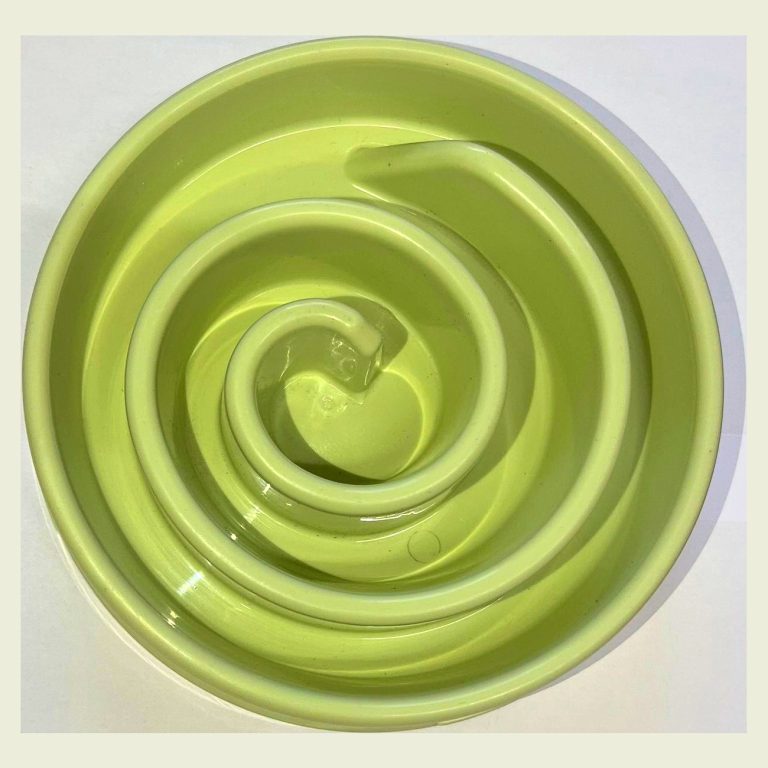
Slow feeder bowls have raised sections, channels or shallow obstacles that spread food out. Instead of taking one large mouthful after another, the dog works around the design to reach smaller amounts.
They are different from an automatic feeder, which releases food at set times. They also differ from a moving food toy or a puzzle with doors and sliders. There is some overlap, but the challenge and the way the dog uses each item can be quite different.
What can slow feeder bowls help with?
The most straightforward benefit is that a well-matched bowl can slow the pace of eating. Veterinary guidance includes slow feeders among the options for dogs who gulp meals. How much difference it makes depends on the dog, food and design. I would not choose one based on a promise that every meal will take a particular number of minutes.
For some dogs, finding food around the bowl is also an enjoyable activity. The RSPCA’s enrichment guidance includes feeding activities as one way to meet dogs’ behavioural needs. Watch your own dog’s response. An activity is only useful enrichment if the dog can engage with it comfortably.
A slow feeder does not replace walks, social contact, rest or training. It does not fix separation anxiety, food guarding or an underlying medical reason for increased hunger. It also does not control calories for you. Measure the normal meal before putting it into the bowl.
Choosing a slow feeder that suits your dog
| Check | What you are looking for |
|---|---|
| Face and mouth shape | Room to reach the food without squeezing the muzzle between narrow ridges. Flat-faced dogs may need a much shallower, more open design. |
| Size and stability | Enough space for the meal, a stable base and a position where your dog can eat comfortably. |
| Difficulty | Wide, shallow channels for a beginner. Increase challenge only if the dog is coping well. |
| Material and condition | A food-contact product with smooth edges, no loose parts and no damaged or chewable sections your dog might swallow. |
| Cleaning | Channels you can clean thoroughly, following the maker’s washing and dishwasher instructions. |
For a puppy, an older dog or a dog with dental pain, mobility problems or a medical feeding plan, ask your vet whether a particular design is suitable. A bowl that works beautifully for one dog may be awkward for another.
Dry food, wet food and different feeder styles
A shallow slow feeder is often a practical starting point for a dog who eats dry food quickly. Spread a small amount through the easiest sections first. Check that the kibble fits the channels.
A wet-food compatible bowl or lick surface can suit a soft meal if the maker allows it. Begin with a light spread the dog can reach easily. Keep perishable food fresh and clean the surface thoroughly afterwards. Freezing is optional, and making the meal harder is not automatically better.
A snuffle mat or food toy offers a different activity, but suits a dog who searches for food without shredding or swallowing the item. Supervise and stop if your dog starts eating the equipment. Our guide to how dogs smell explains why giving them opportunities to use their nose matters.
A wide, shallow food-safe tray can be a simple option for spreading a measured meal over more space. Check it stays steady and is suitable for your dog. Do not add stones or other loose objects to an ordinary bowl to create obstacles.
How to introduce a slow feeder bowl
- Choose a quiet spot. Keep other animals and children away so your dog can eat without competition.
- Make the first attempt easy. Put a small amount of the usual food in the most accessible parts. There is no need to change the diet as well as the bowl.
- Watch from a comfortable distance. Look for relaxed eating and an ability to reach the food. Avoid hovering over the dog or reaching into the meal.
- Keep an ordinary bowl available. If the feeder is too difficult, let your dog finish in a suitable simpler bowl. They do not have to solve a puzzle to receive dinner.
- Build gradually. Use more of the measured meal in the feeder once your dog is comfortable. There is no requirement to use it at every meal.
- Wash and check it. Clean after use, dry as appropriate and inspect for cracks, rough edges or missing pieces.
What if my dog guards their food?
A dog who stiffens, freezes, growls or snaps around food needs space and a thoughtful plan. Do not test them by taking the bowl away, putting your hands in it or making children feed them.
Feed separately behind a suitable barrier and leave the dog in peace. Ask your vet and a suitably qualified behaviour professional for help. A feeder that makes a meal last longer can also mean the dog has a valued resource in front of them for longer. It should not be treated as a solution to guarding.
Do slow feeder bowls prevent bloat?
A bowl can slow eating, but that is not a guarantee against bloat or gastric dilatation-volvulus, usually called GDV. This is a serious veterinary emergency with several risk factors. Ask your vet about your dog’s individual risk, feeding routine and whether preventive gastropexy is worth discussing.
Animal Emergency Service explains the signs and treatment of GDV. Be wary of advertising that turns “helps slow eating” into “prevents a twisted stomach”. They are different claims.
When fast eating needs a vet check
If your dog’s appetite or eating pattern has changed suddenly, or they are losing weight, struggling to swallow, coughing during meals, bringing food back up or repeatedly vomiting, arrange veterinary advice. Changing bowls should not delay assessment.
The same applies to a dog who appears hungry all the time despite an appropriate ration. Diet, medication and health may need reviewing. Feeding routines work best when we understand what is happening with the individual dog.
Common questions about slow feeder bowls for dogs
Can puppies use a slow feeder?
Some can, with an appropriately sized, easy design and supervision. Make sure they can eat enough of their normal puppy food comfortably. Ask your vet if there are health, growth or feeding concerns.
Can I leave my dog alone with one?
Supervise the introduction and follow the product instructions. A dog who chews, tips or swallows parts of a feeder should not be left with it. An item that has been safe so far still needs regular checks.
Is the hardest design the best one?
No. Choose the simplest design that achieves a comfortable pace. Your dog does not need to graduate to a harder bowl just because one is available.
Will it help my dog lose weight?
It may change how the meal is eaten, but weight management depends on the overall diet and energy intake. Measure meals, account for treats and work with your vet on an appropriate plan.
Making mealtimes work for your household
A slow feeder can be a useful tool when it suits the dog. Start simply, watch the response and be willing to change the plan.
For puppies, our puppy setup sessions and Brisbane Puppy School help families build manageable routines. For ongoing behaviour concerns, our in-home consultations allow a closer look at the household and the dog’s needs.
If food activities are part of a plan for time alone, read our separation anxiety guide too. A dog who is distressed when left needs support beyond a food bowl.
Give your dog a pat from us.
Sources and further reading
- RSPCA Australia: enrichment for dogs
- VCA Animal Hospitals: helping puppies who eat too quickly
- Animal Emergency Service: GDV symptoms and treatment
Reviewed 17 October 2026. General information only; seek veterinary advice about individual feeding or health concerns. Featured photo: ELTORO.VET / Wikimedia Commons, CC0. Image illustrates a feeder design, not a particular product recommendation.