- Home
- Dog Behaviour
- Why Does My Dog Lean on Me, Sit on My Feet, or Stick Like Velcro?
Why Does My Dog Lean on Me, Sit on My Feet, or Stick Like Velcro?
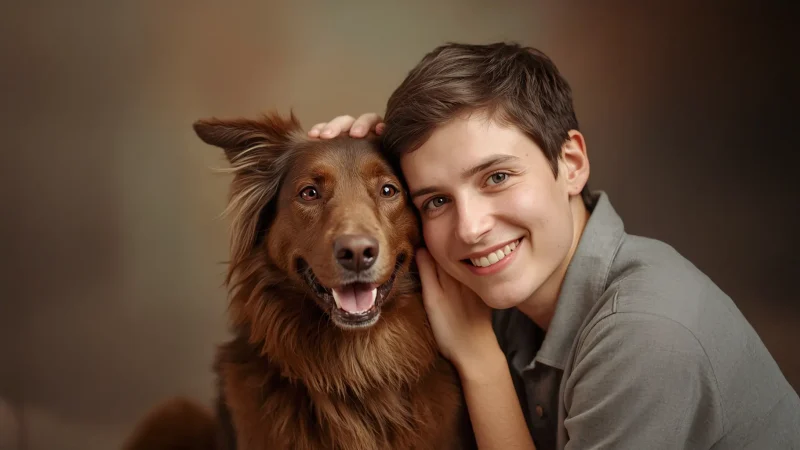
If you share your life with a dog, chances are you have experienced it.
You’re standing in the kitchen and suddenly you’re pinned against the bench by forty kilos of dog.
You sit down and your dog carefully parks themselves on your foot like it’s prime real estate.
You relax on the couch and somehow your dog believes your lap is still suitable seating.
It feels meaningful, and for many people, comforting.
But it’s also one of those behaviours that has attracted a lot of strange myths over the years.
So what’s actually going on?
At Jordan Dog Training, this is something we’re asked about regularly. And the good news is, in most cases, it’s completely normal and often quite lovely canine behaviour.
Let’s clear up the biggest myth first
You may have heard things like:
- “If a dog stands on your foot, they’re dominating you.”
- “If a dog sleeps on your feet, they’re claiming ownership.”
- “If they lean on you, they’re being bossy.”
These ideas come from very old dominance-based theories that are no longer supported by modern behavioural science. They are not taught by reputable trainers, vets, or behaviourists in Australia today.
Standing on your foot does not mean dominance.
Sleeping on your feet does not mean ownership.
Leaning on you does not mean your dog is trying to control you.
What it usually means is much simpler.
Dogs are social, physical creatures
Dogs are highly social animals. In healthy social groups, dogs often rest close together, touch lightly when settling, or sleep in contact. Physical proximity helps them feel safe and connected.
When your dog leans against you, sits on your feet, or presses their body into your leg, they are choosing closeness. For many dogs, that contact feels secure and familiar.
This behaviour is commonly referred to as proximity seeking, and it’s a normal part of attachment in dogs.
Dogs are very good at noticing changes in us
Dogs may not understand human emotions in the way we do, but they are excellent at noticing change.
They pick up on:
- shifts in posture
- changes in movement
- tone of voice
- breathing patterns
- routine changes
- subtle scent changes that happen when we’re stressed or tired
When something feels different, many dogs naturally move closer. Leaning, sitting on feet, or resting against you is one way they do that.
They are not diagnosing anxiety.
They are responding to their environment.
And you are a big part of their environment.
Why leaning often feels calming for humans
Many people say their dog leaning on them feels grounding. There’s a good reason for that.
Gentle, trusted physical contact can be calming for the human nervous system. At the same time, positive contact strengthens the bond between dog and human.
Dogs are not intentionally performing therapy, but the effect of calm physical closeness can be genuinely soothing for both sides. Over time, dogs learn that leaning and settling near their person feels good, and they repeat it.
Why some dogs do this more than others
This behaviour is not breed specific. You’ll see it in tiny dogs, large dogs, working dogs, companion dogs, and everything in between.
What makes the biggest difference is:
- temperament
- early learning and reinforcement
- confidence levels
- how safe the dog feels in their environment
- the relationship they have with their person
Many dogs learn this behaviour in puppyhood. A puppy presses in, gets comforted, and that pattern sticks for life.
Not all dogs show affection this way
It’s important to say this clearly.
Some dogs love full-body contact.
Others prefer to lie nearby without touching.
Some show affection through eye contact, following you from room to room, soft body language, or simply choosing to be close.
A dog who doesn’t lean is not less bonded. They just communicate connection differently.
Dogs with arthritis, pain, sensory sensitivity, or a history of being handled roughly may also avoid pressure. That’s normal too.
When leaning is worth paying closer attention
Most of the time, leaning is relaxed and affectionate. Occasionally, it can also be a sign that a dog is feeling unsure.
If your dog is leaning while also:
- panting when it’s not hot
- scanning the environment
- holding their body stiffly
- tucking their tail
- refusing food
- becoming unusually clingy
that’s not dominance. That’s communication. The dog may be overwhelmed and looking for support. In those moments, reducing pressure, increasing space, or leaving the situation can help.
If leaning suddenly increases in an older dog, or comes with stiffness or discomfort, it’s always worth chatting with your vet to rule out pain.
So what is your dog really saying?
When your dog leans on you, sits on your feet, or settles their weight against you, the message is usually very simple.
I feel safe here.
I like being close to you.
Let’s slow down for a moment.
In a busy world, dogs are very good at reminding us to pause.
And honestly, if your dog has chosen you as their favourite place to rest, that’s a pretty big compliment.
If you’d like more practical guidance on understanding your dog’s behaviour, building calm confidence, or supporting emotional regulation, the Jordan Dog Training website has a wealth of searchable blogs on common dog topics. Our accredited trainers are also always here to help you and your dog feel more confident together.
Give your amazing dog a pat from us 🐾
Disclaimer:
The information provided in this blog is intended as general guidance and is based on our experience as dog trainers and behaviourists. It is not veterinary advice and should not replace consultation with a qualified veterinarian. If you have any concerns about your dog’s health, wellbeing, or mobility, we always recommend speaking with your vet to ensure the best care for your dog.

Justin Jordan
Master Trainer
- In-home behaviour modification consultations
- Puppy schools
- Obedience classes
- Specialist training
- Media enquiries
- Trainer opportunities
- Supplier enquiries
- Guest appearances