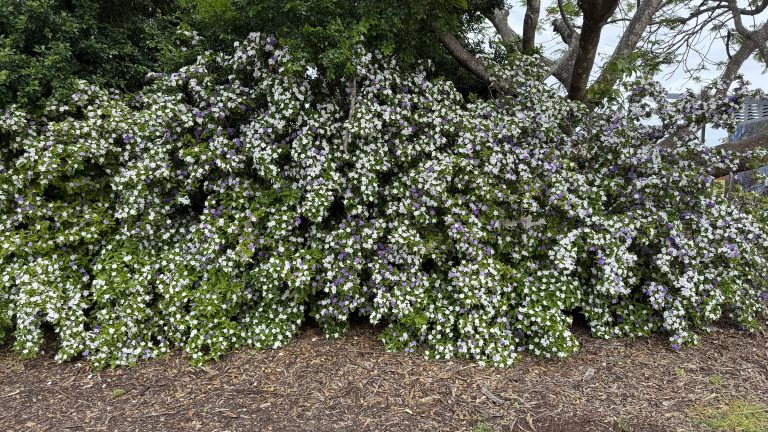

If you walk your dog around Brisbane, you might recognise Yesterday, Today and Tomorrow. Each flower opens purple, fades to mauve and eventually turns almost white. That’s how you get three colours on the one bush. It’s one of the toxic plants for dogs worth knowing by name.
Is Yesterday, Today and Tomorrow toxic to dogs?
Every part of this plant is toxic to dogs if eaten, including the flowers, leaves, berries, seeds and roots. Poisoning can be life-threatening. If you think your dog has chewed or swallowed any part of it, ring your vet or the nearest emergency vet straight away, even if your dog seems well.
Poisonous garden plants for dogs: check what your dog can reach
When we look at a flowering hedge, we tend to notice the flowers. If you’ve got a puppy, you’ll know they’re often more interested in what’s underneath. A low branch poking through the fence or a few fresh clippings left on the lawn can be all the invitation they need.
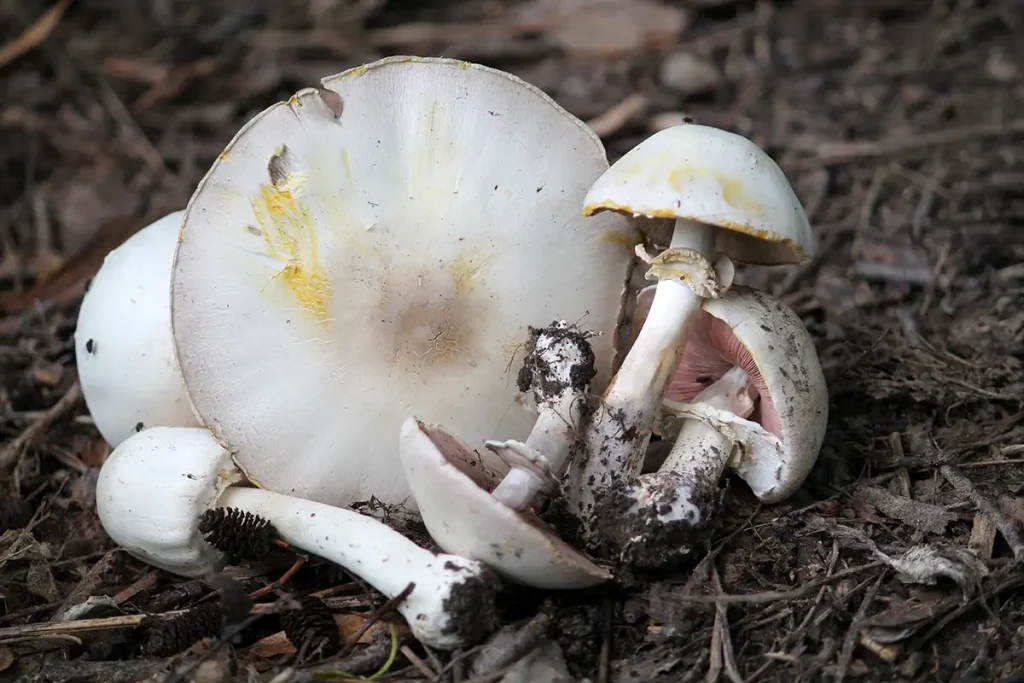
If you have this shrub in your garden, have a look from your dog’s side of the fence. Can they reach a branch, get underneath the hedge or pick up anything that’s fallen? Keep that area out of bounds and collect any clippings and fallen berries before letting your dog back into the yard. After a few wet days, it’s also worth checking the lawn and mulch. We cover that in our guide to toxic mushrooms and dogs.
On a walk, I’d give the hedge a little room and let your dog enjoy a sniff further along. A well-practised “leave it” is handy when your dog spots something before you do. Start at home with something harmless and reward them for turning back to you. Our guide explains how to teach your dog to leave it.
What to do if your dog chews Brunfelsia
Move your dog away from the plant and ring your vet. Tell them when it happened, which part your dog may have eaten and roughly how much, if you know. If someone is with you, ask them to take a photo of the plant while you call. You can also ring the Australian Animal Poisons Helpline on 1300 869 738. Don’t try to make your dog vomit unless your vet or the helpline tells you to.
Signs of Brunfelsia poisoning in dogs can include drooling, vomiting, diarrhoea, wobbliness, muscle tremors and seizures. If your dog is already trembling, struggling to walk or having a seizure, head straight to the nearest emergency vet.
You can see more identifying features in the Queensland Poisons Information Centre’s Brunfelsia plant guide.
A note from Justin
I’m a dog trainer, not a vet. I’m sharing this as general information to help you recognise a risk in your garden or on your walks. If you’re concerned about your dog’s health, please speak with your vet. If you suspect your dog has eaten a toxic plant, make that call straight away.
Give your dog a pat from us 🐾
Justin Jordan
Master Trainer & Founder, Jordan Dog Training

Justin Jordan is a dog behaviourist and the founder of Jordan Dog Training, a family-owned Brisbane business. With more than 35 years of experience in the pet industry, Justin and his team help families with puppy training, everyday manners and behaviour concerns.