By Justin Jordan | 17 October 2026
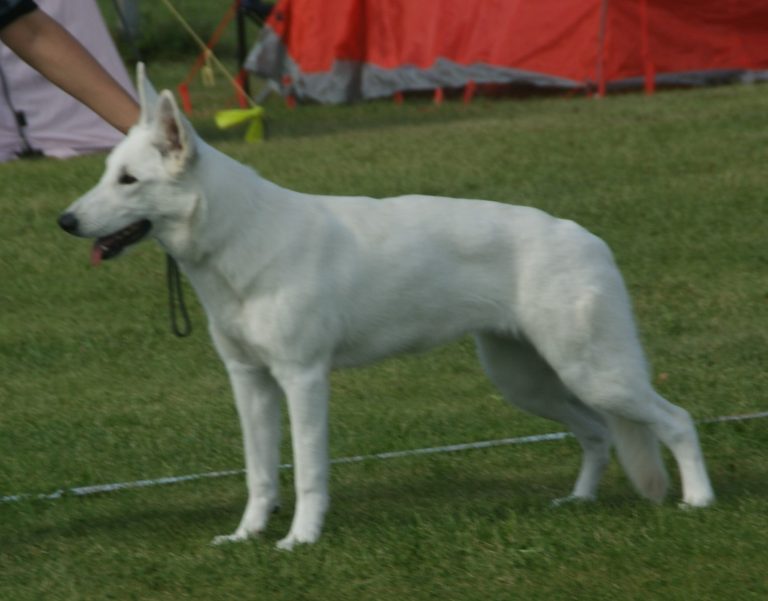
You see a beautiful white shepherd walking down the street and ask what breed they are. One person says Swiss Shepherd. Another says White Shepherd. Someone else tells you they are all just white German Shepherds.
No wonder people get confused. There is a shared history, but the names do not always mean the same thing. If you are thinking about bringing one home, understanding the paperwork is useful. Understanding the dog is even more useful.
Swiss Shepherd vs White Shepherd: the names explained
| Name you hear | What to check |
|---|---|
| Swiss Shepherd | Usually shorthand for the White Swiss Shepherd Dog. Confirm the full name on the pedigree. |
| White Swiss Shepherd Dog | The breed recognised by Dogs Australia and the FCI. The international standard is number 347. |
| White Shepherd | The United Kennel Club in the USA recognises a breed under this name. In Australia, ask about the particular club or registry. |
| White German Shepherd | A description associated with German Shepherd ancestry and coat colour. A white coat alone does not make a dog a registered White Swiss Shepherd. |
Dogs Australia’s breed standard is the Australian reference. The UKC White Shepherd standard explains its separate registry history, including recognition in 1999. These are different registration systems. A pedigree from one organisation should not be assumed to transfer automatically to another.
Also, pedigree registration, breeder membership, microchipping and council registration are different things. If an advertisement says “registered”, ask what is registered, with whom, and what documents you will receive. For Dogs Australia registration or event eligibility in Queensland, confirm the details with Dogs Queensland before paying a deposit.
Where does the German Shepherd connection come from?
The connection is real. White shepherd lines developed from German Shepherd ancestry, with breeders in North America preserving white coated dogs. Dogs from those lines later contributed to the Swiss population.
The official history identifies an American male named Lobo, born in 1966, as an important foundation dog in Switzerland. White shepherds were recorded as a new breed in the Swiss stud book appendix from 1991. The FCI granted provisional recognition in 2002 and definitive recognition in 2011.
Shared ancestry does not mean every white shepherd now has the same registration status. Nor does it mean a registered White Swiss Shepherd is simply a German Shepherd with a different colour on the paperwork.
Can you tell the difference by looking?
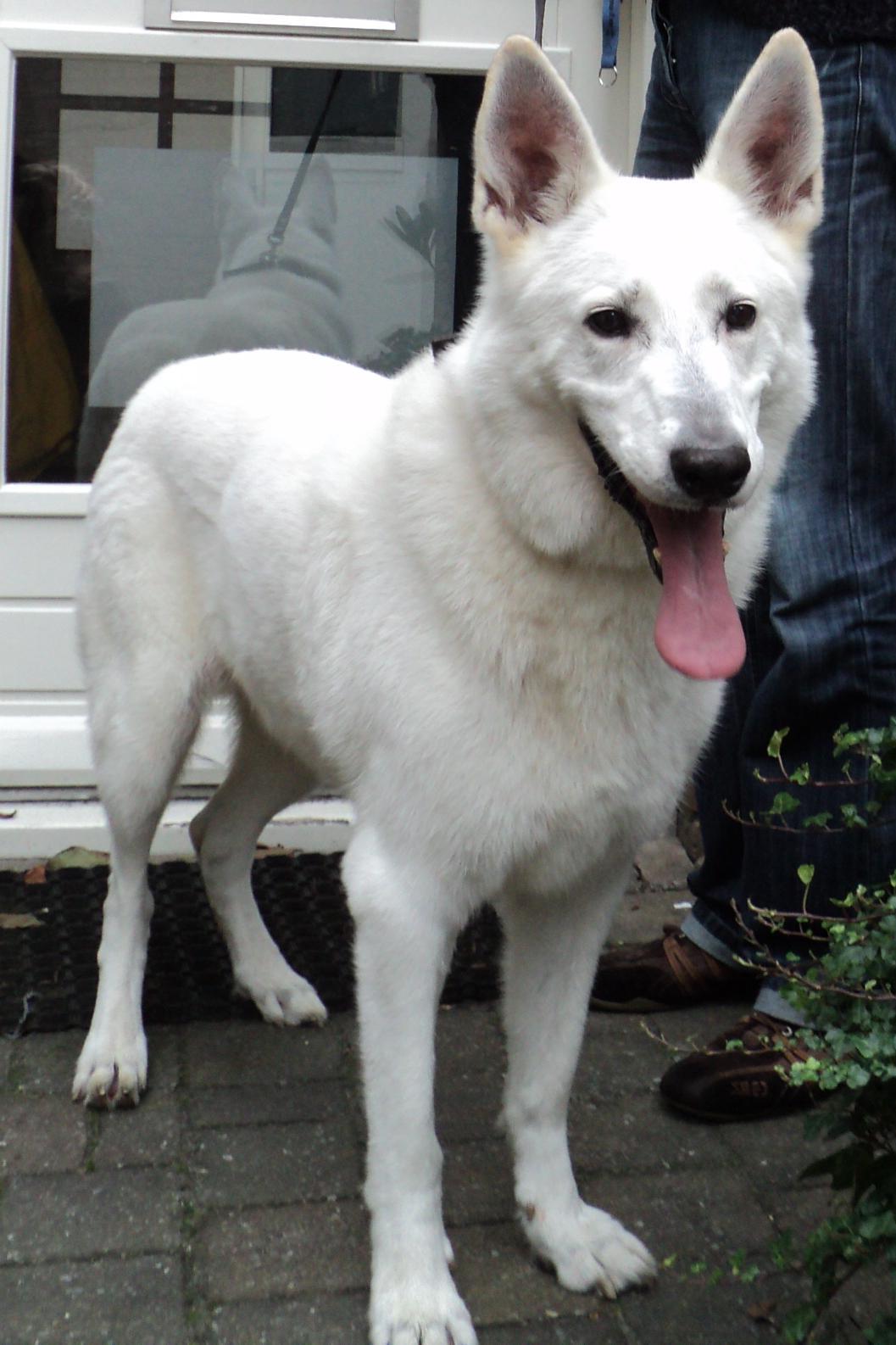
Not reliably. Coat length, head shape, build and posture vary between individual dogs and breeding lines. Both a fluffy coat and a shorter coat can appear in white shepherd populations. Trying to sort them into breeds from two social media photographs can be misleading.
The White Swiss Shepherd standard allows medium-length and long double coats. The Australian standard lists males at 58–66 cm at the shoulder and approximately 30–40 kg; females at 53–61 cm and approximately 25–35 kg. Those are breed-standard guides, not a weight target for every pet. Your vet should assess your dog’s body condition.
Their white coat is not the same as albinism. Normal dark pigmentation around the eyes, lips and nose is part of the breed description. A white dog is not automatically deaf, blind or unhealthy because of coat colour. Equally, a lovely coat tells us nothing about the quality of a breeder’s health screening.
What are they like to live with?
The breed standard describes an active, attentive companion with an aptitude for learning. That is a starting point, not a promise that every puppy will be confident in a busy household or relaxed around unfamiliar dogs.
I would be cautious about blanket statements such as “Swiss Shepherds are always softer” or “White Shepherds are more protective”. Registry names do not give us a dependable temperament test. Look at the parents, the breeder’s priorities, the puppy’s early experiences and the individual dog.
For everyday life, I would want a family to plan for:
- Daily involvement: walks, sniffing, appropriate play and short training sessions, alongside enough rest.
- Clear guidance: teach what you want, reward it and keep expectations consistent between people.
- Thoughtful socialisation: comfortable experiences at a manageable distance, rather than being passed around or pushed into greetings.
- Handling and grooming: make brushing, paw checks and veterinary care familiar before they become a struggle.
- Time alone: introduce short, comfortable separations gradually. Do not assume an intelligent dog will work it out unaided.
Our loose lead walking guide and Leave It training steps are useful foundations for a growing shepherd. Teach these skills while the setting is easy, rather than waiting until you have a strong adolescent at the end of the lead.
Exercise, coat care and Brisbane weather
Think about a balanced routine rather than chasing a daily kilometre target. A puppy, a fit adult and an older dog with sore joints need different plans. Include opportunities to use their nose, learn something manageable and settle afterwards. More running is not always the answer to a dog who struggles to switch off.
The double coat needs regular brushing, with more work when shedding increases. Introduce grooming gently and check for tangles, skin irritation and grass seeds. Ask a groomer or vet for advice if coat care is becoming uncomfortable.
In Brisbane, plan activity around the temperature and humidity. Choose cooler parts of the day, provide shade and water and adjust the outing to your dog. A white coat does not make a dog heat-proof.
Health questions to ask before buying a puppy
Ask to see actual results, with identification matching the parents. “Vet checked” and “DNA tested” are not complete explanations of a breeding health programme.
The Australian breed club’s health information includes hip and elbow dysplasia, MDR1 drug sensitivity and other inherited conditions. Discuss relevant screening with your vet and breeder. A DNA panel does not replace hip and elbow assessment, and a clear result for one mutation does not mean a dog is free of all inherited problems.
Ask about the health and longevity of relatives, any recurring digestive or mobility problems, and what support is offered if concerns arise. The Royal Kennel Club’s breed guide lists a lifespan of over 12 years, but individual lifespan varies. Plan for ongoing veterinary care and the costs of a large dog.
Are Swiss Shepherds becoming more popular in Australia?
They certainly attract attention, but attention is not the same as a measured rise in popularity. Dogs Australia recorded 148 White Swiss Shepherd Dog registrations in 2025, compared with 175 in 2024 and 309 in 2023, in its national registration analysis.
Those figures describe registrations in that system. They do not count every white shepherd living in Australia, dogs on other registries or social media interest. They also do not support a claim that registrations are currently booming. Choose a breeder for health, temperament and transparency rather than a “rare colour” sales pitch.
Before you say yes
Ask which breed and registry are involved, meet suitable adult relatives where possible, look at health records and discuss an ordinary week in your home. How much time will the dog spend alone? Who will train and groom them? What happens when work gets busy?
Our questions to consider before getting a dog and male versus female dog guide can help with that decision. There is a lot more to a good match than appearance.
Common questions
Is every White Shepherd a White Swiss Shepherd?
No. The name may be used casually or within a different registration system. Check the dog’s documented pedigree and the relevant organisation’s rules.
Are they easier to train than German Shepherds?
There is no useful guarantee from the breed name. Motivation, health, individual temperament, early experiences and the way we teach all matter.
Can a first-time owner have one?
Potentially, with a suitable individual dog, realistic expectations and support. Be honest about the time, handling and training involved. Ask for advice before committing if you are unsure.
A thoughtful start makes a difference
If you are welcoming a puppy in Brisbane, our in-home puppy setup sessions help you prepare, and Jordan Dog Training Puppy School builds early skills. For older dogs, explore our group obedience classes or individual behaviour consultations.
A white shepherd can be a wonderful companion. Take the time to understand the dog behind the lovely coat.
Give your dog a pat from us.
Registration and breed references checked 17 October 2026. General information only; discuss individual health concerns with your veterinarian. Featured photo: Canarian / Wikimedia Commons, CC BY-SA 4.0, original photograph.