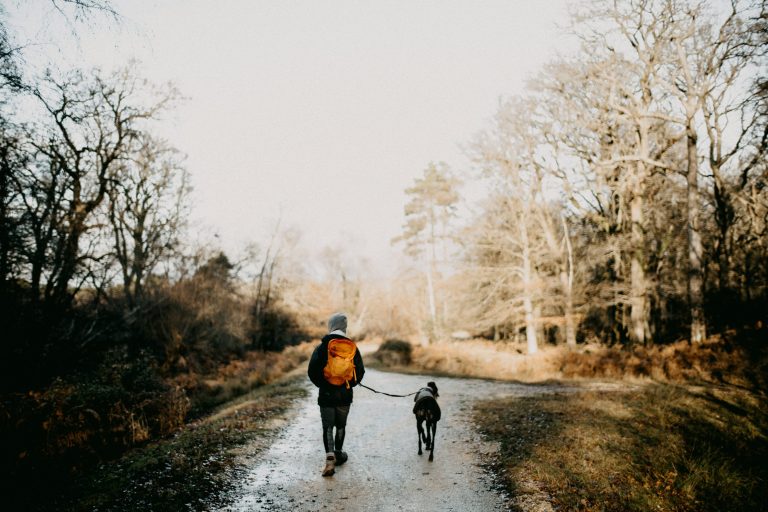
A dog who barks or lunges on lead may be frightened, frustrated, excited or overwhelmed. Similar-looking reactions can have different causes. Understanding lead frustration in dogs starts with the individual dog and the situation, rather than assuming they are being stubborn or need firmer handling.
The aim is to keep everyone safe, make walks more manageable and teach useful skills at a level your dog can cope with. Progress is usually gradual, and a plan that suits one dog may be too difficult for another.
What is lead frustration, and is it the same as aggression?
Frustration can occur when the lead prevents a dog from reaching something they want, such as another dog. A fearful dog may instead want more distance and feel unable to move away. Barking and lunging are often described as lead reactivity; those behaviours alone do not tell you the underlying motivation.
Reactivity does not follow a single, inevitable path into aggression. However, any dog who is highly aroused or frightened may present a safety risk. Take growling, snapping or attempts to bite seriously and arrange individual advice.
Common causes and contributing factors
- Emotions and expectations: fear, frustration, excitement and anticipation may all contribute. A dog used to greeting every dog may find passing without greeting difficult.
- Previous experiences: both rewarding encounters and frightening events can shape expectations. A reaction alone does not prove a history of trauma.
- The setting: narrow paths, crowding, close approaches or limited escape options can make a walk harder.
- Health and comfort: pain, illness or sensory changes may affect behaviour. Arrange a veterinary check for a new or worsening reaction, especially if your dog seems uncomfortable.
Updated printable factsheet
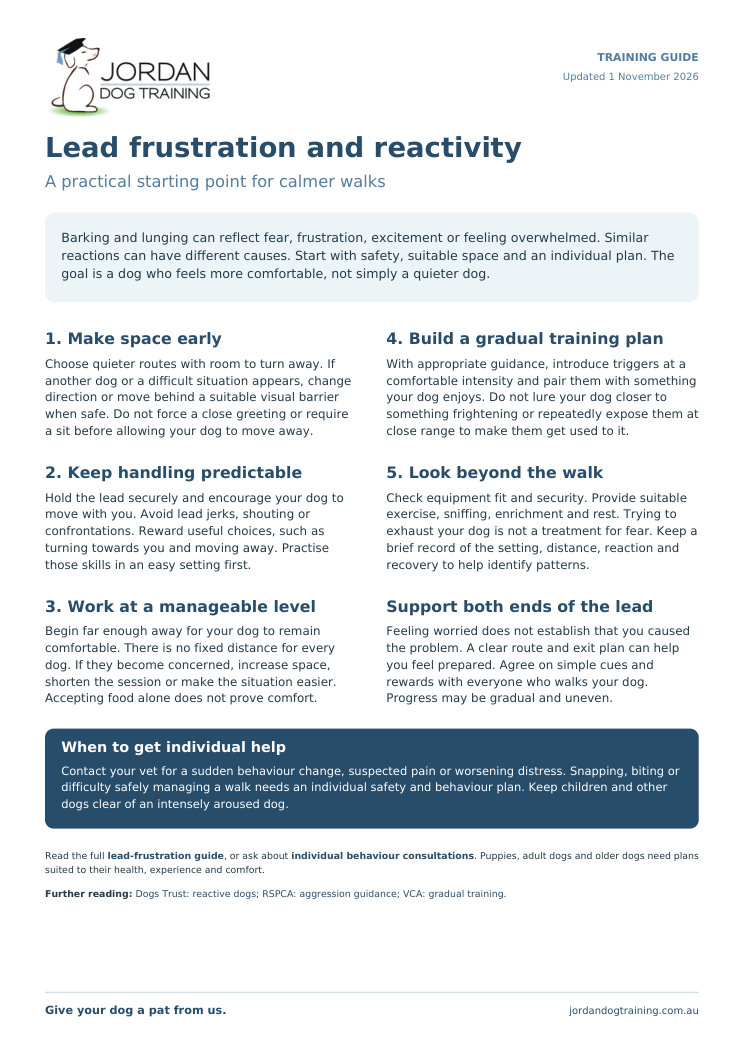
What to do when you see a trigger
- Make space early. Change direction or cross the road when safe. Use a suitable visual barrier, such as a parked car, without moving into traffic or trapping your dog.
- Keep control without confrontation. Hold the lead securely and encourage your dog to move away. Avoid jerking the lead, shouting or forcing them to sit close to the trigger.
- Choose an achievable distance. Give your dog enough space to recover. There is no standard number of metres that suits every dog or every day.
- Reward useful choices. In manageable situations, reward turning towards you, moving away and walking with you. Practise these skills in quiet places first.
- End a difficult outing safely. If your dog remains distressed, a shorter walk or a different activity may be more appropriate than pushing through.
If your dog has already reacted, concentrate on creating safe distance. Do not require obedience before allowing them to move away. Keep other people, children and dogs clear, and avoid reaching towards the mouth or grabbing at the collar of an intensely aroused dog.
Gradual training: change the experience, not just the outward behaviour
Desensitisation means introducing a trigger at a low enough intensity for the dog to remain comfortable, then progressing gradually. Counterconditioning aims to change the emotional association by pairing the trigger with something the dog enjoys. These approaches need a suitable starting point and careful timing.
Start with professional guidance when reactions are strong or there is a bite risk. If your dog shows concern, increase distance or reduce the difficulty. Do not lure them towards something frightening, or repeatedly expose them at close range in the hope they will get used to it. Accepting food alone does not prove comfort.
Supporting the person holding the lead
Walking a reactive dog can be stressful. Feeling worried does not establish that you caused the problem, and being more assertive is not a treatment plan. What helps is having practical options: a quieter route, space to turn away and an agreed response when another dog appears.
Use steady, predictable handling and seek support if you feel unable to keep the situation safe. Managing the environment gives both you and your dog more room to succeed.
Consistency and manageable routines
Agree on simple cues and rewards with everyone who walks your dog. Keep sessions short, record what happened and notice patterns such as location, distance and recovery time. Progress is more than silence: look for a dog who can move comfortably, disengage and settle after the experience.
Suitable exercise, sniffing, rest and enrichment support daily wellbeing. Trying to exhaust a dog is not a substitute for understanding fear or frustration, and more busy walks can mean more difficult encounters.
Positive experiences at every age
For puppies, focus on comfortable introductions and the option to move away, rather than meeting as many dogs as possible. Our Puppy School can help with early foundations. Adult dogs can learn new skills too. With older dogs, changes in pain, mobility, hearing or vision may make a previously familiar walk harder.
Equipment and the walking environment
Choose quieter times and routes with good visibility and room to leave. Check that your dog’s equipment is secure and comfortable. Different collars or harnesses suit different dogs; our guide to safe harnesses for dogs explains fit and movement checks. Equipment supports management but does not resolve the cause on its own.
If there is a bite risk, ask your vet or behaviour professional about an appropriate safety plan, including gradual, positive introduction to a well-fitted basket muzzle where suitable. A muzzle does not make close encounters comfortable or remove the need for distance.
Read the whole dog
Watch for changes such as becoming still, staring, leaning away or struggling to disengage. Ear position, tail movement or one yawn cannot diagnose an emotion on its own. Consider the whole posture and what is happening around your dog. Our guide to fear responses explains this in more detail.
Common questions
Should I let my dog greet every dog to improve socialisation?
No. Comfortable observation and passing at a suitable distance are useful skills. Forced greetings can make a worried dog feel trapped, while frequent greetings may strengthen a frustrated dog’s expectation that every dog means play.
Will a different harness stop the reactions?
A suitable harness may improve comfort and handling, but it does not replace a training and management plan. Check fit and security, and choose equipment around your dog’s needs.
When do we need individual help?
Seek veterinary and behaviour advice for sudden changes, repeated distress, snapping, biting or difficulty safely controlling a walk. A busy group class is not the starting point for a dog who cannot cope around other dogs.
Get help with a suitable plan
For everyday walking skills, see our loose lead walking guide. Our in-home behaviour consultations offer individual guidance alongside veterinary care where needed.
Further reading: Dogs Trust on reactive dogs, RSPCA Queensland’s lead-reactivity factsheet, RSPCA guidance on aggression and VCA on desensitisation and counterconditioning.
Illustrative photographs: Annie Spratt on Unsplash; Jack Plant on Unsplash.
Give your dog a pat from us.