
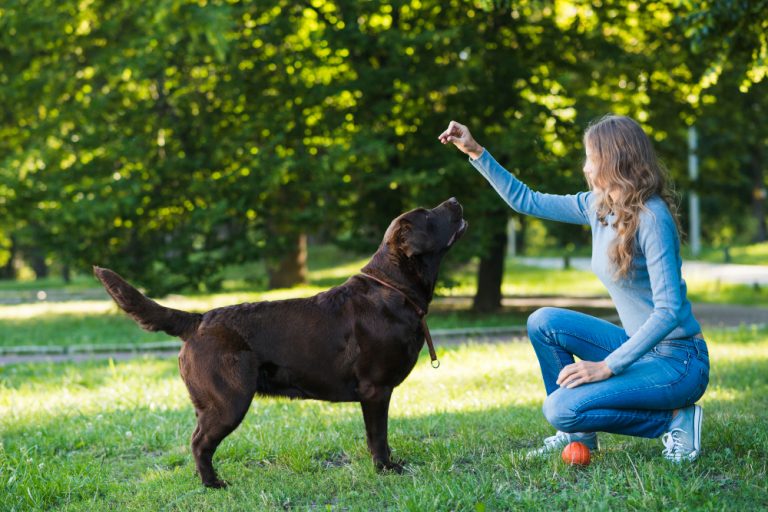

In recent years, a new conversation has been taking shape in the dog training world: should dogs be able to “consent” to training? While the idea may sound unusual at first, it reflects a growing emphasis on understanding dogs as sentient beings with their own emotional experiences and boundaries. At Jordan Dog Training, we believe this is a valuable discussion worth exploring with curiosity, compassion, and balance.
This topic touches on deeply held beliefs about ethics, welfare, autonomy, and the human-animal bond. While some practitioners are enthusiastic advocates for consent-based training, others raise valid concerns about its practicality or the potential for misinterpretation. Our goal here is not to take a side, but to present the topic in a respectful, evidence-informed way that encourages ongoing learning and open dialogue.
Clarifying Language: What Do We Mean by ‘Consent’?
While the term “consent” is borrowed from human ethical frameworks, we recognise that dogs cannot truly consent in a legal or cognitive sense. Instead, the term is used here as a behavioural shorthand — referring to voluntary participation, emotional readiness, and observable comfort levels. Like many concepts in training, this language is evolving and imperfect, but it provides a useful lens for considering how we approach and interpret a dog’s engagement.
Some critics argue that the term “consent” risks anthropomorphising dogs or could be misused to justify a lack of structure. These concerns are valid and highlight the importance of applying these ideas thoughtfully, not dogmatically.
What Do Trainers Mean by ‘Consent’ in Dog Training?
In the context of dog training, “consent” refers to a dog’s willingness to participate in an activity, often observed through voluntary engagement and relaxed body language. A consenting dog typically:
- Approaches the trainer voluntarily
- Shows relaxed body posture and interest
- Remains engaged without showing avoidance, distress, or escape behaviours
This concept is especially relevant in cooperative care, where dogs are taught to actively participate in their own grooming or vet care. For example, a dog might place their chin on a towel to indicate readiness for ear cleaning, or lift a paw voluntarily for nail clipping. Some trainers also use specific consent cues—like a chin rest or a nose touch—to signal the dog is willing to proceed.
These ideas are part of a growing movement that seeks to give dogs more agency in their interactions with humans. They are not about letting dogs dictate every situation, but rather about recognising when a dog is emotionally ready to participate and respecting that state.
Where Does the Idea Come From?
The idea of consent in training has roots in zoological and marine animal care, where trainers often rely on voluntary participation because physical restraint is not feasible or ethical. In these contexts, animals such as dolphins, elephants, and primates are taught to participate in husbandry procedures through trust and reinforcement, rather than force.
This approach has gradually made its way into companion animal care. In particular:
- Programs like Fear Free™ Certified Practices encourage reducing stress and promoting voluntary cooperation.
- Trainers working on cooperative care behaviours often cite examples from marine mammal training, adapting them for grooming and veterinary care.
- Some dog professionals develop “consent-based” protocols where dogs can opt into or out of interactions using trained cues.
The idea has also been expanded upon in recent literature and educational materials about canine welfare. For example, a recent framework discusses different types of canine consent—from interaction-based and cooperative care, to choice during daily routines—though these are conceptual models rather than scientific consensus.
The growing interest in consent-informed training parallels developments in the fields of animal-assisted therapy, veterinary behaviour, and zoo enrichment, and echoes welfare-driven frameworks promoted by organisations such as the International Association of Animal Behavior Consultants (IAABC) and the Pet Professional Guild (PPG).
What Does the Research Say?
There is a growing body of evidence in animal welfare and learning science that supports the benefits of providing animals with choice and control. While dogs cannot consent in the legal or human sense, research does indicate that animals who feel in control of their environment experience:
- Lower stress levels
- Better coping strategies
- Improved learning and behaviour retention
One key principle in training is to avoid creating situations where a dog feels trapped or helpless—known as “learned helplessness.” Giving dogs a way to opt out, or to ask for a break, can prevent this and create a more emotionally safe learning environment.
It’s worth noting that, at present, there is no formal scientific consensus stating that dogs must give “consent” in all training contexts. The idea is more philosophical than prescriptive, and it is still emerging within the broader training community.
What Are the Ethical Considerations?
Ethically, the conversation around consent invites us to reflect on how we interpret and respond to our dogs’ emotions and body language. Some guardians and trainers feel that if a dog appears fearful or avoidant, pushing them forward might damage trust. Others point out that in many real-life scenarios—like vet visits or safety-critical training—guiding a dog forward is necessary, even if they’re not eager.
It’s also worth recognising that many dogs do genuinely enjoy training when it is delivered in a positive and engaging way. They seek out interaction, offer behaviours eagerly, and appear emotionally connected to the process. This can be seen as a form of implicit consent.
However, dogs who are fearful, under-socialised, or have experienced trauma may not be ready to engage enthusiastically. In these cases, a trainer’s job is to find the balance between respecting the dog’s signals and helping them learn that the world can be safe and predictable.
Does That Mean Dogs Should Always Choose Whether to Train?
This is one of the more debated aspects of the conversation. In an ideal world, dogs would always feel safe and eager to train—but in reality, there are times when structured guidance is necessary:
- A leash-reactive dog can’t simply opt out of behaviour modification—they need support to prevent escalating risk.
- A puppy who ignores recall can end up in danger if not taught to respond reliably.
- Certain care procedures (e.g. nail trims or ear drops) need to be done, even if the dog is reluctant.
Many professionals use what’s called a consent-informed approach—where training plans aim to encourage voluntary participation, observe body language closely, and allow for breaks or decompression. The goal is not to avoid all pressure but to be aware of its effects and minimise unnecessary stress.
A Practical, Balanced Approach
At Jordan Dog Training, we approach this topic with an open mind and practical experience. We believe in training that is fair, kind, and effective, with a strong focus on relationship and trust. This means:
- Watching for signs of stress or shutdown
- Using positive reinforcement to build engagement
- Adjusting training to suit each individual dog’s needs
- Providing structure while respecting the dog’s emotional state
Not all methods or techniques work in every situation or for every dog. Much like people, dogs learn in different ways and at different paces. We believe in exploring and getting to know the individual dog—then using the appropriate methods, techniques, and training styles to create a holistic and tailored approach. What is best for the individual dog is at the core of everything we do at Jordan Dog Training.
Having said that, we want to be clear: we do not believe in or accept the use of harsh or punitive methods. There is no justification for training practices that rely on fear, pain, or intimidation. Our approach is always based on respect, clarity, and the goal of building a lasting bond between dog and guardian.
Sometimes, a little extra patience and creativity can help a dog shift from hesitant to happy participant. But we also acknowledge that not every moment allows for complete choice—especially when safety, health, or behavioural risks are at stake.
Final Thoughts
The conversation around consent in dog training is still evolving, and it raises important questions about ethics, welfare, and how we communicate with our canine companions. While there is no one-size-fits-all answer, we believe the discussion is worthwhile—and that listening, learning, and being willing to adapt are key parts of any modern training philosophy.
We welcome respectful discussion and differing viewpoints, and we’re always happy to chat more about how consent, choice, and cooperation can be part of a balanced training relationship.
If you’d like to learn more about this topic or how to help your dog feel confident and comfortable during training, our team at Jordan Dog Training is here to help.
Further Reading:
- Cooperative Care: Seven Steps to Stress-Free Husbandry by Deb Jones, PhD
- IAABC Journal articles on agency and behaviour modification
- The Bucket Game by Ken Ramirez — a protocol promoting voluntary participation
Disclaimer: The information provided in this blog is intended as general guidance and is based on our experience as dog trainers and behaviourists. It is not veterinary advice and should not replace consultation with a qualified veterinarian. If you have any concerns about your dog’s health, wellbeing, or behaviour, we recommend speaking with your vet.
Give your amazing dog a pat from us