
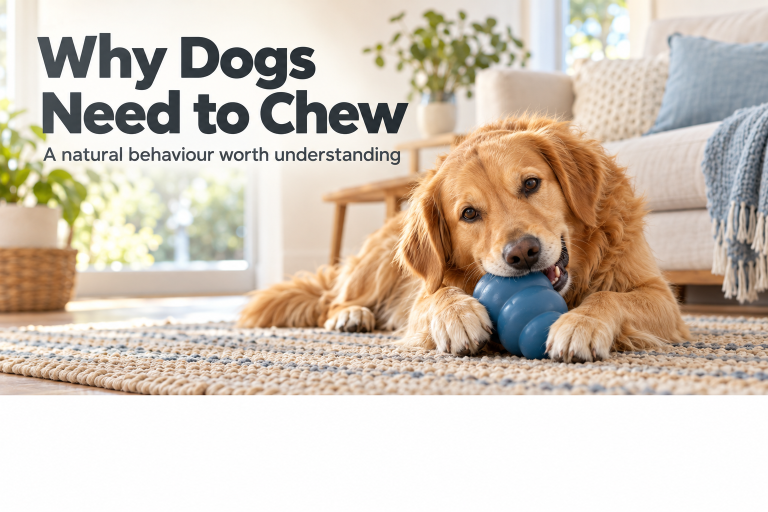

Chewing is normal dog behaviour and can be an enjoyable activity. The useful question is what suits your individual dog, rather than whether a chew is described as natural, tough or calming.
Choose for the dog in front of you
Consider age, size, dental health and how your dog uses the item. Some dogs nibble; others try to break off and swallow large pieces. Follow product directions and ask your vet about choices for puppies or dogs with health problems.
Supervise, inspect items for damage and remove pieces that could be swallowed. Offer chews separately when dogs may compete over them. Keep children away from a dog with a chew, and avoid reaching in to take it from a dog who is guarding.
Harder does not mean better for teeth
Very hard items can fracture teeth. Avoid stones and hard ice, and take care with bones, antlers and rigid chew toys. No chew is suitable for every dog, and a dog’s enthusiasm does not establish that it is safe.
Arrange a vet check for a broken tooth, mouth pain, bleeding or a change in eating. Do not assume chewing will clean away an existing dental problem.
Check the evidence behind dental claims
Some specific dental diets, chews and other products have evidence for reducing plaque or tartar. The Veterinary Oral Health Council’s accepted-product list identifies products and the claims they have met its criteria for.
This does not make every similar-looking chew equivalent. A natural ingredient or a general claim about saliva does not establish tartar control. Discuss toothbrushing, professional checks and suitable products with your vet.
Chewing and settling
A suitable chew may be part of a pleasant routine. Watch whether your dog actually remains comfortable and settled. We should not promise that a chew causes a particular hormone release or treats anxiety.
If your dog panics when left alone, guards items or suddenly changes their chewing habits, seek individual advice. More chews are not a complete behaviour plan. Our guide to comfortable time apart explains when a puppy needs more support.
Count edible chews as food
Include edible chews in your dog’s daily intake. Check ingredients and suitability if your dog has dietary restrictions or is on a veterinary food trial. Natural and single-ingredient products are not automatically suitable for every dog.
Sources

Justin Jordan is a dog behaviourist and the founder of Jordan Dog Training, a family-owned Brisbane business. With more than 35 years of experience in the pet industry, Justin and his team help families with puppy training, everyday manners and behaviour concerns.