

As your dog gets older, you might need to adapt your routine and start rethinking the way you take care of your best friend. If you want to make aging the most comfortable possible for you and your dog, here are a few things you should consider.
Is my dog old?
Not all dogs are aging the same way: large breed dogs are usually aging faster than small breeds. For instance, a Great Dane will be considered a senior at 6 or 7 years of age, whereas a Poodle might live longer and only be considered a senior once in their teen years.
As a general rule, dogs aged 7 or older should be considered middle to senior aged – to calculate more accurately your dog’s age, you can use this dog age calculator based on its breed or see our conversion table.
What should I expect?
Each dog is different, but here are a few things you might notice: your dog will slow down, which might be due to arthritis. It will also be graying around the muzzle, have a reduced hearing and cloudy eyes, which are all normal effects of aging. You might see your dog starting to hesitate before going up the stairs, or not reacting when you call his name. As a precaution, it is always safer to take your dog to the vet for a check-up when you start noticing these signs. Your vet might be able to ease your dog’s discomfort due to arthritis, and diagnose potential problems such as cataracts or diseases related to muscle atrophy.What should I do?
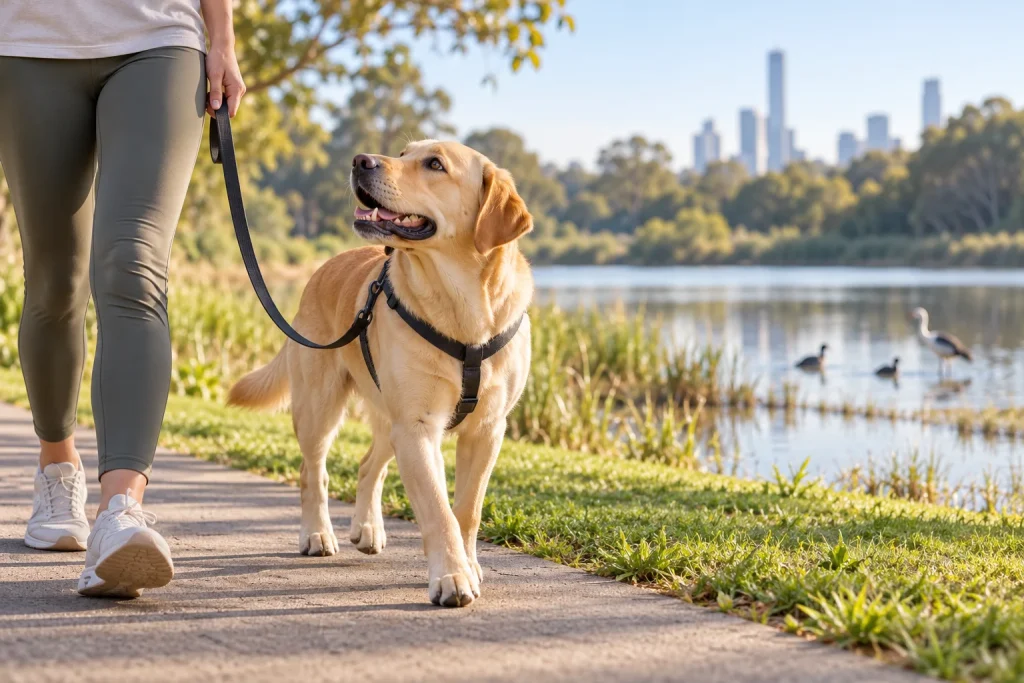
- It is important to keep exercising with your dog to maintain healthy joints and muscles. Don’t push too hard, but keep taking him out every day.
- Don’t forget to groom your four legged friend – teeth cleaning, ears and skin checking are a must.
- Keep up your regular vet visits and vaccinations, and don’t overlook what can seem like a minor problem. Note all symptoms or unusual behaviour and report back to your vet to get his opinion. Your vet can also do a body condition evaluation to determine if your dog is overweight or underweight.
- Switch to lighter food made for senior canines, and go for soft treats. As your dog’s teeth get older, you want to give him things that are easy to chew.
- Provide your older dog with an appropriate bed – dogs with arthritis can benefit from soft bedding.