
Last updated: 9 October 2026.
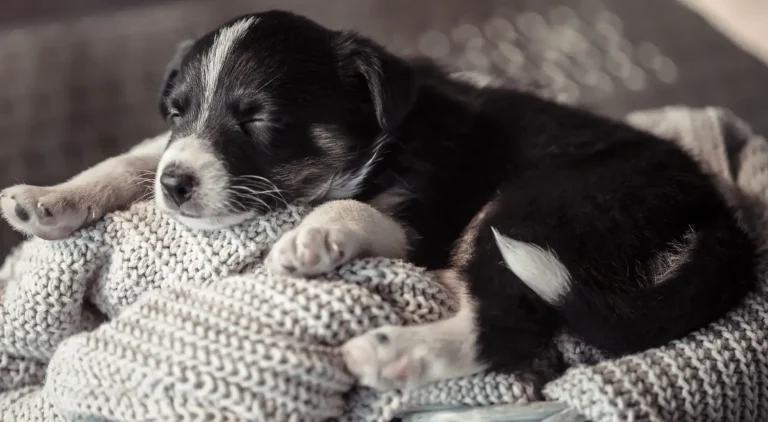
The first nights with a new puppy can be a big adjustment for everyone. Your puppy has left familiar people, littermates and surroundings, so give them time, reassurance and a simple routine. This is Part 2 of our puppy home series, following Part 1: getting ready.
Keep the first days manageable
Allow time to help your puppy settle, whether that means taking leave, sharing care or arranging suitable support. Avoid a constant stream of visitors. Let your puppy explore a small, safe area with you nearby, and offer regular opportunities to rest.
Arrange a veterinary health check and take along any records from the breeder or rescue. Your vet can advise on vaccinations, feeding, parasite prevention and suitable outings. Keep introductions to veterinary handling gentle and positive.
Help your puppy feel secure overnight
Set up a comfortable sleeping area where you can hear and respond to your puppy. Being near you initially can help them settle. If you prefer a different sleeping location long term, work towards it gradually as your puppy becomes comfortable.
If your puppy cries, check whether they need a toilet break, reassurance or a change to the setup. Do not assume they are being naughty or trying to control you. You can comfort a worried puppy. Avoid leaving them to cry until exhausted.
Keep overnight toilet trips quiet and return to the sleeping area afterwards. Young puppies vary in what they can manage, so adapt the routine to the puppy rather than expect uninterrupted sleep straight away.
Build habits with clear, consistent teaching
Reward the things you want to see again, including choosing a toy, coming towards you or settling on a bed. Keep practice short and easy. Use a name you enjoy saying, then teach your puppy that looking towards you when they hear it is rewarding.
Put tempting belongings away and use gates or a pen when supervision is difficult. If something goes wrong, make the arrangement easier for next time. Scolding after an accident or damage does not explain the behaviour you wanted. Avoid hitting, frightening or physically forcing your puppy.
Introduce brief separation gradually
Practise very short periods of separation while your puppy is comfortable and their needs are met. Start with an easy arrangement, such as you moving a little farther away while they settle. Return before they become distressed, and build up gradually.
If your puppy panics, cannot settle or repeatedly struggles when you move away, reduce the difficulty and seek individual advice. Leaving a distressed puppy alone for longer is not a useful shortcut.
Make interactions calm and supervised
Give your puppy a choice about approaching visitors. Supervise children actively and provide a separate resting space when you cannot do so. Introductions to other household pets should be managed carefully, with space and breaks for everyone.
For biting, toilet accidents, chewing and balancing activity with sleep, continue to Part 3: toilet training, chewing and rest. If your puppy seems unwell or their behaviour changes suddenly, speak with your vet.
Our Puppy Set Up service can help you establish a routine suited to your household. Contact Jordan Dog Training for practical support.
Read the puppy home series
- Part 1: Getting ready
- Part 2: The first nights and settling in
- Part 3: Toilet training, chewing and rest
Planning your first class? Read our ten puppy school tips, then check our Puppy School locations and dates.